What is the basic anatomy and function of the pelvic and hip joint?
The basic anatomy and function of the pelvic and hip joint involves activation by a large number of muscles in the pelvis (lower part of the body), such as the quadriceps muscle and many muscles located in the pelvic area, including the Iliopsoas. The nervous system controls and directs these muscles, distributing loads on the muscles and the joints.
What causes pelvic and hip joint pain?
Pelvic and hip joint pain can be caused by many factors, such as excess weight, cartilage erosion, and even problems with the spine. If the problem is with the spine, typically the spine should be treated (usually the lower back) to address the hip joint pain, as the pain is usually projected from the back. This section will also cover how these pains are diagnosed, prevented, and treated.
There may be many causes of pelvic and hip joint pain, such as excess weight, cartilage erosion, and even problems with the spine. If the problem is with the spine, typically the spine should be treated (usually the lower back), in order to treat pain in the hip joint. In such a case, the pain is usually projected from the back.
What does pelvic and hip joint pain feel like?
Pelvic and hip joint pains are accompanied by pain in the hip joint area but can also be felt in the groin area, in the buttock. Sometimes you will feel stiffness after sitting for extended periods of time or after waking up in the morning.
How is pelvic and hip joint pain diagnosed?
The doctor will ask you about the nature, location, and time of onset of the pain in order to determine the source of the pain. Following that, ultrasound and MRI tests will be done. Upon receiving the results of the clinical tests, the doctor will diagnose the source and cause of the pain.
How long does joint pain last?
Joint pain from infections usually lasts a couple of months. In contrast, when a degenerative disease is causing the pain, it may become persistent (chronic). If you have an autoimmune disease such as lupus or arthritis, some medications can reduce the frequency of the pain.
How is the pain treated? Can advanced technology help?
When treating pelvic and hip joint pain, you will be required to rest during treatment in order to prevent worsening of the condition. This is not complete rest; you must just avoid the specific activity that caused the pain at the outset. Of course, it is possible and advisable to continue with your daily routine.
A considerable part of the hip pain (if not due to a serious illness) may subside after a period of rest and after avoiding the movements that cause the pain. This is in addition to medical advice regarding appropriate treatment, if necessary.
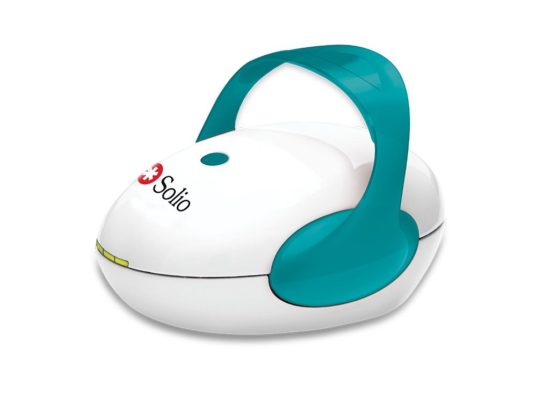
Along with this, it is highly recommended to hasten recovery from the pain by using advanced technologies for pain relief, primarily – home devices such as “Solio Alfa”, a light, simple and user-friendly device. Additionally, unlike similar devices, “Solio Alfa” is the only one that also operates on radio waves that allow treatment and penetration into the depth of the tissues with heating. “Solio Alfa” is designed to treat a variety of different types of pain that result from different sources (but not all of them, of course. Please refer to the consumer leaflet or the information found on this website). The pain healing process is very perceptible, due to the combination of technologies and the feeling of heat that penetrates deep into the calf or the hip.
How is pelvic and hip joint pain treated with “Solio Alfa Cure Plus”?
Apply a thin layer of gel on the device, place the device on the area being treated (see picture) and start sliding the device over the entire treatment area shown in the picture for 15-20 minutes once a day. Treatment with the device at level 3 (you must watch the instructional video before using the device for the first time). If you feel excessive heat during the treatment, you can slightly increase the treatment area so that the heat is distributed over a larger area.

It is necessary to keep treatment up once a day in order to benefit from the optimal result from the treatment. Do not stand still in one place. Use steady slow movement throughout the entire duration of the treatment.
Coordination of expectations: in the hip joint and pelvic area you can start to feel relief after 4-7 treatments. Treatment should be continued until the pain is reduced.
It is also important to take care to rest the pelvis during the treatment days and avoid overload on the area.
Will pelvic and hip joint pain be prevented in the future?
With regard to pelvic and hip joint pain, it is recommended to reduce the load on the area, cut down on training and excessive walking and even incorporate physical therapy treatments.
Stop the pain now with Solio – the only pain-relieving radio wave technology device.