

Sciatica pain is primarily caused by pressure exerted on the sciatic nerve. Leading causes include herniated or ruptured discs (the most common cause), muscle contractions, displacement of vertebrae, injury (mechanical or degenerative) between vertebral discs, circulatory disorders, and inflammation. Vitamin B deficiency may also contribute. The sciatic nerve is the longest and thickest nerve in your body, responsible for sensation in your feet and legs. The pain typically starts in the lower back and shoots down to the leg, sometimes reaching the foot or stopping in the thigh, and can also be felt on one side of the buttocks. It is essential to accurately diagnose the source of pain with a specialist.
What causes sciatica pain?
As in many cases involving pain, there are several answers, and it is essential to accurately diagnose the source of pain with a specialist. The leading causes of sciatica pain include pressure exerted on the nerve (by spinal vertebrae, for example), circulatory disorders, and inflammation.
The list also includes herniated or ruptured discs (the most common cause), muscle contractions, and any pressure exertion on the nerve, displacement of the vertebrae, injury (mechanical or degenerative) between the vertebral disc, and more. Vitamin B deficiency may also cause this.
What does sciatica feel like?
Sciatica is unmistakable, with stabbing, burning, or piercing sensations in the area. It sometimes creates a restriction on movement, especially when walking or climbing stairs. Sometimes weakness can also be felt on the foot.
How common is sciatica?
Whether you are an athlete or you spend most of the day sitting down, anybody can be affected by sciatica. More than 20 percent of people will experience at least one bout of sciatica pain during their lifetime, with most cases happening to people between the ages of 45 to 65.
How long does sciatica last?
The good news is that in most cases, sciatica pain goes away on its own in a matter of 8-6 weeks. In fact, few suffer from these pains for a full year (less than 1% of the population).
How is sciatica treated? Is there any advanced instrumentation that can help?
After you have been diagnosed with sciatica by your doctor, it’s time to treat it. For starters, it is important to stay active and move (to some extent), but if the pain is unbearable, rest is definitely helpful.
Some doctors will suggest taking painkillers or injecting steroids, but there is no evidence that these actually improve the condition. Physical therapy may also be beneficial and expedite the end of the pain period.
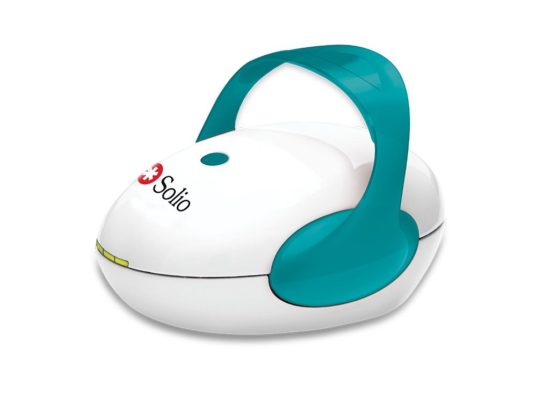
Another proven method is the use of advanced pain relief technologies, in the form of home appliances, most notably “Solio.” Solio is the first and only device of its kind to use radio waves to penetrate deep inside the tissue and heal pain, and it is also simple to operate and user-friendly.
Solio, manufactured in Israel, is designed in a way that can treat a considerable amount of pain from different sources (but not all of them, of course. Please refer to the Consumer Newsletter or the website information for more information). It is worth noting that when you use Solio, the pain healing process can be clearly felt thanks to the sensation of heat emitted from the device and penetrating to the depth of the hip, shin, or buttocks.
How is Sciatica pain treated with “Solio Alfa Cure Plus”?
Apply a thin layer of gel on the device, place the device on the area being treated (see picture) and start sliding the device over the entire treatment area shown in the picture for 15-20 minutes once a day. Treatment with the device at level 3 (you must watch the instructional video before using the device for the first time). If you feel excessive heat during the treatment, you can slightly increase the treatment area so that the heat is distributed over a larger area. To obtain an optimal result from the treatment, you must continue with the treatment once a day. Do not stand still in one place. Use steady slow movements throughout the entire duration of the treatment.

In the lower back area, it is recommended to have someone help you because the back should be relaxed during the treatment.
Coordination of expectations: in the back area you will start to feel relief after 5-10 treatments. Treatment should be continued until the pain is reduced. In cases where pain is also radiated toward the buttocks and legs, you should feel an improvement in the irradiated pain after 8-13 treatments, and there is no need to perform the treatment in the irradiated areas, but only in the treatment area in the center of the lower back (seen in the picture). It is also important to take care to rest the back during the treatment days and not to overstrain the area.
How to prevent low back pain in the future?
In many cases, the secret to preventing low back pain is to change certain lifestyle factors. For example, improving your posture, maintaining a healthy weight, using an ergonomic chair at work, and doing exercises or sports that are appropriate to your physical condition are all good strategies to prevent low back pain.
Stop the pain now with Solio – the only pain-relieving radio wave technology device.